
Peer-reviewed publications
Hallowell, M., Quashne, M., Salas, R., MacLean, B., & Quinn, E. (2021). The statistical invalidity of TRIR as a measure of safety performance. Professional Safety, 66(04), 28-34. [ACCESS HERE]

Total recordable injury rate (TRIR) has been used as the primary measure safety of performance for nearly 50 years. Since organizations conform to the same definition, the TRIR metric has been used to compare industries, sectors, companies, and even projects. TRIR is used in many ways and dominates discussions about safety performance from the worksite to the board room.
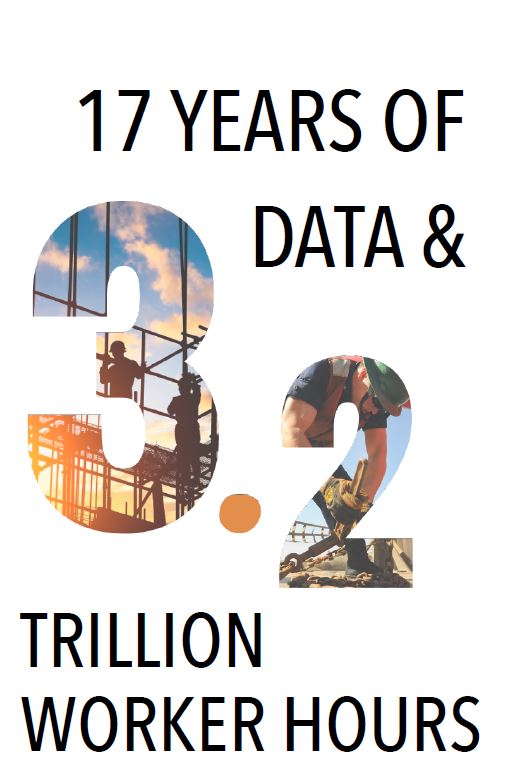
With over 3.2 trillion worker-hours of data supplied by the Construction Safety Research Alliance members, we explored the question: given how it is used, to what extent is TRIR a statistically valid measure of safety performance? Our team of researchers analyzed the data using generalized linear modeling, Monte Carlo simulations, and parametric analyses, which yielded the following conclusions:
Besides the myriad of reasons why it is flawed (underreporting, case management, etc.), the work conclusively shows that TRIR is statistically meaningless given the way it is currently used. For us to transform safety into an evidence-based discipline, we need to scientifically dismantle such unsubstantiated institutions. With TRIR debunked, we are addressing the natural next question, “If not TRIR, then what?”
Hallowell, M., Quashne, M., Salas, R., MacLean, B., & Quinn, E. (2021). The statistical invalidity of TRIR as a measure of safety performance. Professional Safety, 66(04), 28-34. [ACCESS HERE]
Matthew Hallowell
CU Boulder
Mike Quashne
BGE
Rico Salas
CU Boulder
Matt Jones
CU Boulder
Brad MacLean
Wolfcreek
Ellen Quinn
OTIS Elevator
Jenny Bailey
Xcel Energy
Bruno Cagnart
TechnipFMC
Len Colven
TVA
Matt Compher
Quanta Services
Mike Court
Graham Group
Nick DiMartino
MasTec
Ester Brawley
CRC
Phillip Hodge
Chevron
Greg Kelly
Enbridge
Gregg Slintak
Consolidated Edison Comp